
 Save to Pinterest
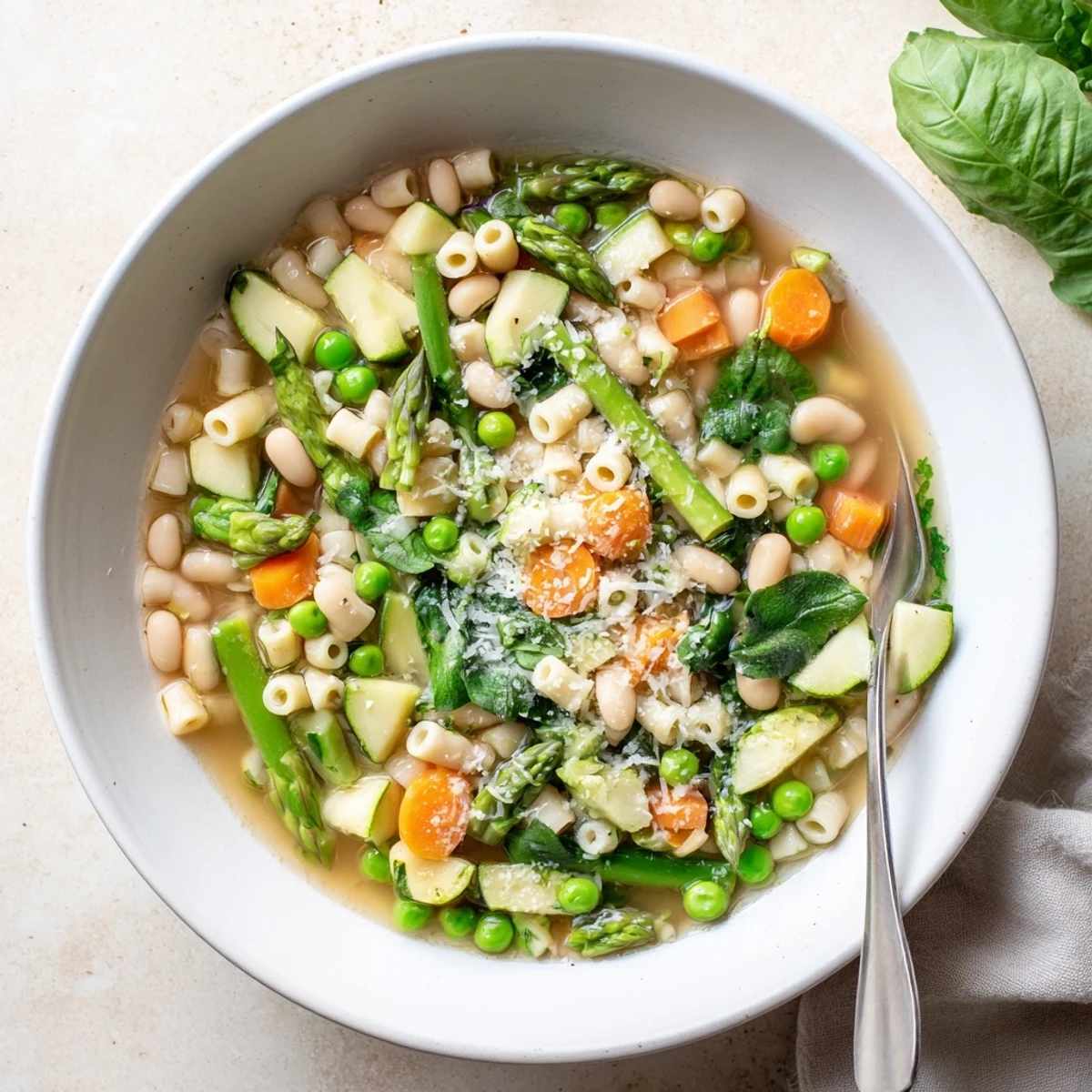
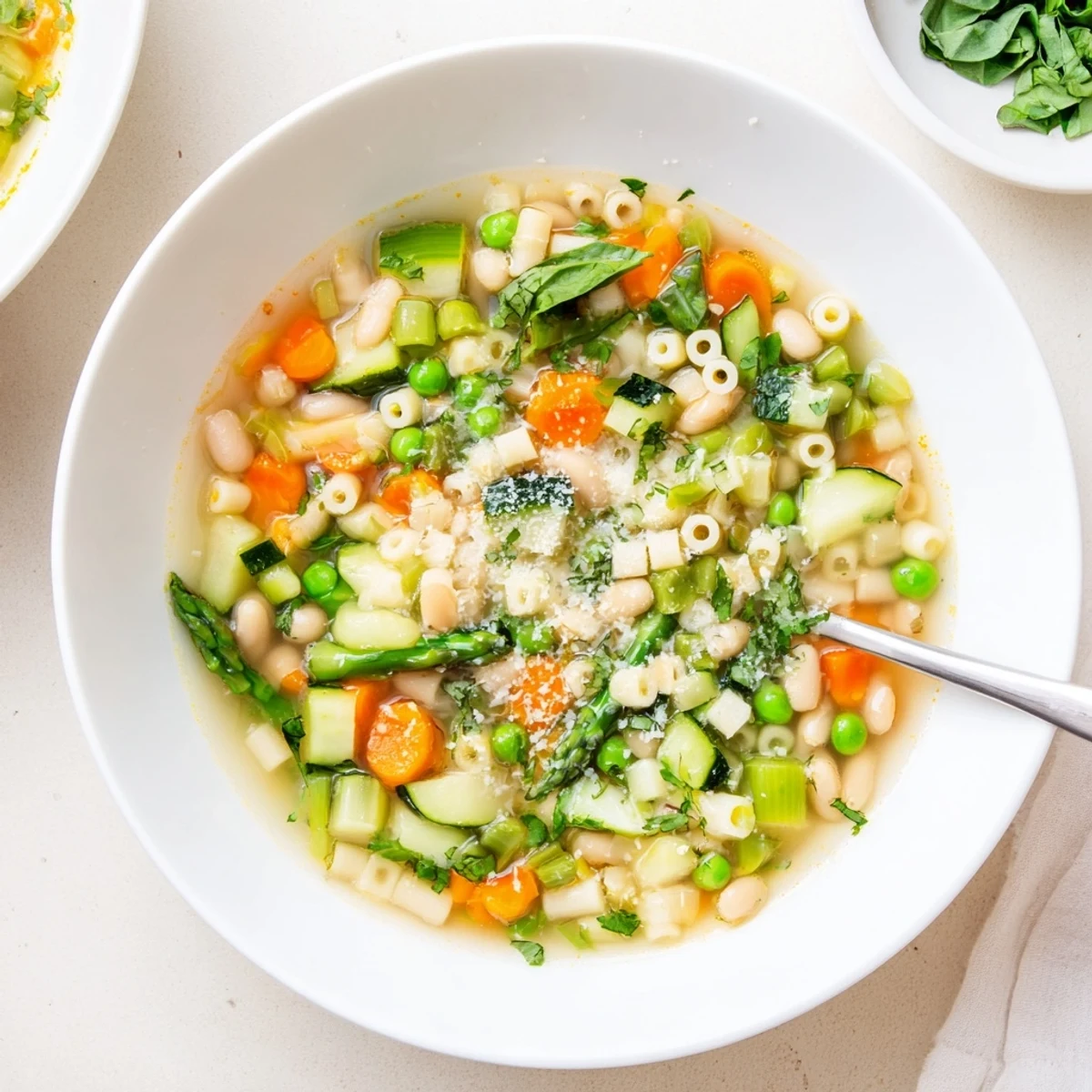
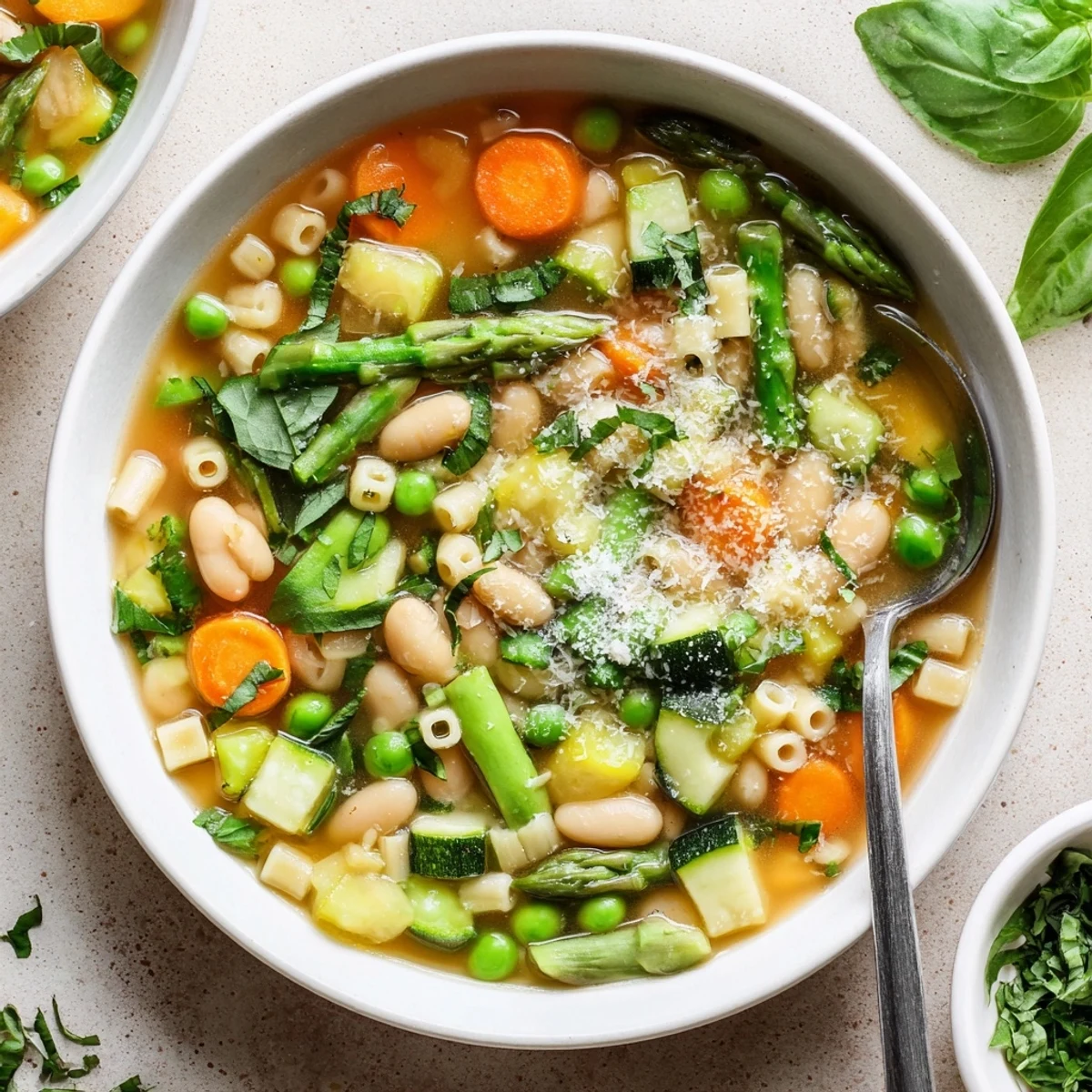
 This spring minestrone brings together asparagus, zucchini, peas, and baby spinach in a light vegetable broth with cannellini beans and small pasta. Fresh basil, parsley, and a splash of lemon juice brighten every bowl. It comes together in just 45 minutes with minimal prep—sauté the aromatics, simmer the vegetables and pasta together, then finish with greens and herbs. Easily adaptable with whatever spring produce you have on hand, and it pairs perfectly with crusty bread.
There was a Saturday in late March when the farmers market suddenly looked like a completely different place, tables overflowing with thin asparagus and bags of fresh peas, and I came home with more vegetables than any reasonable person needed for two people. That chaos on the counter turned into this soup, and it has been my spring reset ever since.
I made a massive batch for a few friends who were helping me paint my kitchen, and every single one of them stopped mid brush stroke when the smell of garlic and basil hit the room. One of them actually sat on an overturned paint bucket with a bowl and refused to get up until it was gone.
Ingredients
- Olive oil: Use something you would drizzle on bread because it is the first flavor that hits the pot and sets the whole soup up.
- Onion: Finely chopped so it melts into the broth rather than leaving chunky surprises.
- Garlic: Two cloves minced, added right after the onion softens, and watched like a hawk so it never browns.
- Carrots: Diced small so they cook at the same speed as the delicate spring vegetables.
- Asparagus: Cut into one inch pieces, and if the stalks are thick just use a vegetable peeler on the bottom halves first.
- Zucchini: Diced small because it can turn mushy if the pieces are too big.
- Peas: Fresh shelled peas are incredible here but frozen work perfectly fine in a pinch.
- Baby spinach: Added at the very end so it just barely wilts and stays bright green.
- Vegetable broth: A good quality broth makes or breaks this so taste it before you pour it in.
- Cannellini beans: Drained and rinsed well, they add creaminess and protein without any cream.
- Small pasta: Ditalini is my favorite but orzo or even broken spaghetti works great.
- Salt and pepper: Start with a teaspoon of salt and a quarter teaspoon of pepper then adjust at the end.
- Fresh basil and parsley: Do not skip the fresh herbs, dried versions would completely miss the point of this soup.
- Lemon juice: Just one tablespoon stirred in off the heat wakes up every single flavor in the pot.
- Parmigiano Reggiano: Optional for serving but honestly it takes the bowl from great to unforgettable.
Instructions
- Build the base:
- Heat olive oil in a large pot over medium heat, add the chopped onion, and cook for about three minutes until it goes soft and translucent. You want it sweet, not browned at all.
- Add the aromatics:
- Stir in the minced garlic and diced carrots, cooking for two to three minutes until you can smell the garlic throughout the kitchen. Keep the heat at medium so nothing catches.
- Bring in the spring vegetables:
- Add the asparagus, zucchini, and peas, stirring occasionally for another two minutes. They do not need to cook through here, just get friendly with the oil and garlic.
- Simmer with broth and beans:
- Pour in the vegetable broth and bring it to a boil, then add the cannellini beans and pasta. Drop the heat to a gentle simmer, cover the pot, and let it go for eight to ten minutes until the pasta and vegetables are tender.
- Finish with greens and herbs:
- Stir in the baby spinach, chopped basil, and parsley, cooking just one or two minutes until the spinach wilts. Pull it off the heat right after because the greens will keep softening in the hot broth.
- Season and serve:
- Stir in the lemon juice, taste, and adjust salt and pepper as needed. Ladle into bowls and finish with grated Parmigiano Reggiano if you are using it.
 Save to Pinterest
 This soup became the thing I bring to new parents and friends recovering from illness because it feels nourishing in a way that heavy comfort food cannot manage when the weather is turning warm. Someone once told me it tasted like someone actually cared about them, and I have never received a better compliment for a bowl of soup.
Swapping in What the Market Gives You
The beauty of minestrone is that it has no strict identity, so I have used fava beans when I found them, green beans cut small, and even sliced leeks instead of onion when the mood struck. The rule is just to keep the total volume of vegetables roughly the same so the broth stays balanced.
Making It a Full Meal
A hunk of crusty bread ripped into pieces and dropped right into the bowl turns this from a light soup into something that sticks with you. I keep a loaf of sourdough around specifically for this purpose, and a cold glass of Pinot Grigio on the side does not hurt either.
Storing and Reheating Without Regret
This soup keeps beautifully in the fridge for three days but the pasta will continue to soak up broth, so add a splash of water or extra broth when reheating. If you know you are making it ahead, cook the pasta separately and fold it in when you reheat each bowl.
- Cool the soup completely before putting it in a sealed container to keep the vegetables from turning dull.
- Freeze individual portions without the pasta and add fresh pasta when you reheat.
- The Parmigiano garnish should always be added fresh, never stored on top of the soup.
 Save to Pinterest
 This is the soup that makes me believe spring is actually happening, even when the mornings are still cold enough for a jacket. Go make it for someone you like, or just for yourself with the window open.
Questions & Answers
- → What vegetables work best in spring minestrone?
-
Asparagus, zucchini, peas, and baby spinach are classic choices. You can also add fava beans, green beans, or leeks depending on what's fresh and available.
- → Can I make this soup vegan?
-
Yes—simply omit the Parmigiano Reggiano garnish or replace it with a plant-based alternative. The soup itself is already fully vegetarian and dairy-free.
- → What type of pasta should I use?
-
Small shapes like ditalini or orzo work best because they fit neatly on a spoon. Any small pasta will do—just avoid long strands or large shapes.
- → How long does leftover minestrone keep?
-
Store leftovers in an airtight container in the refrigerator for up to 3 days. The pasta may absorb some broth, so add a splash of vegetable broth when reheating.
- → Can I freeze spring minestrone?
-
Yes, it freezes well for up to 2 months. For the best texture, consider cooking the pasta separately and adding it when reheating to prevent it from becoming mushy.