
 Save to Pinterest
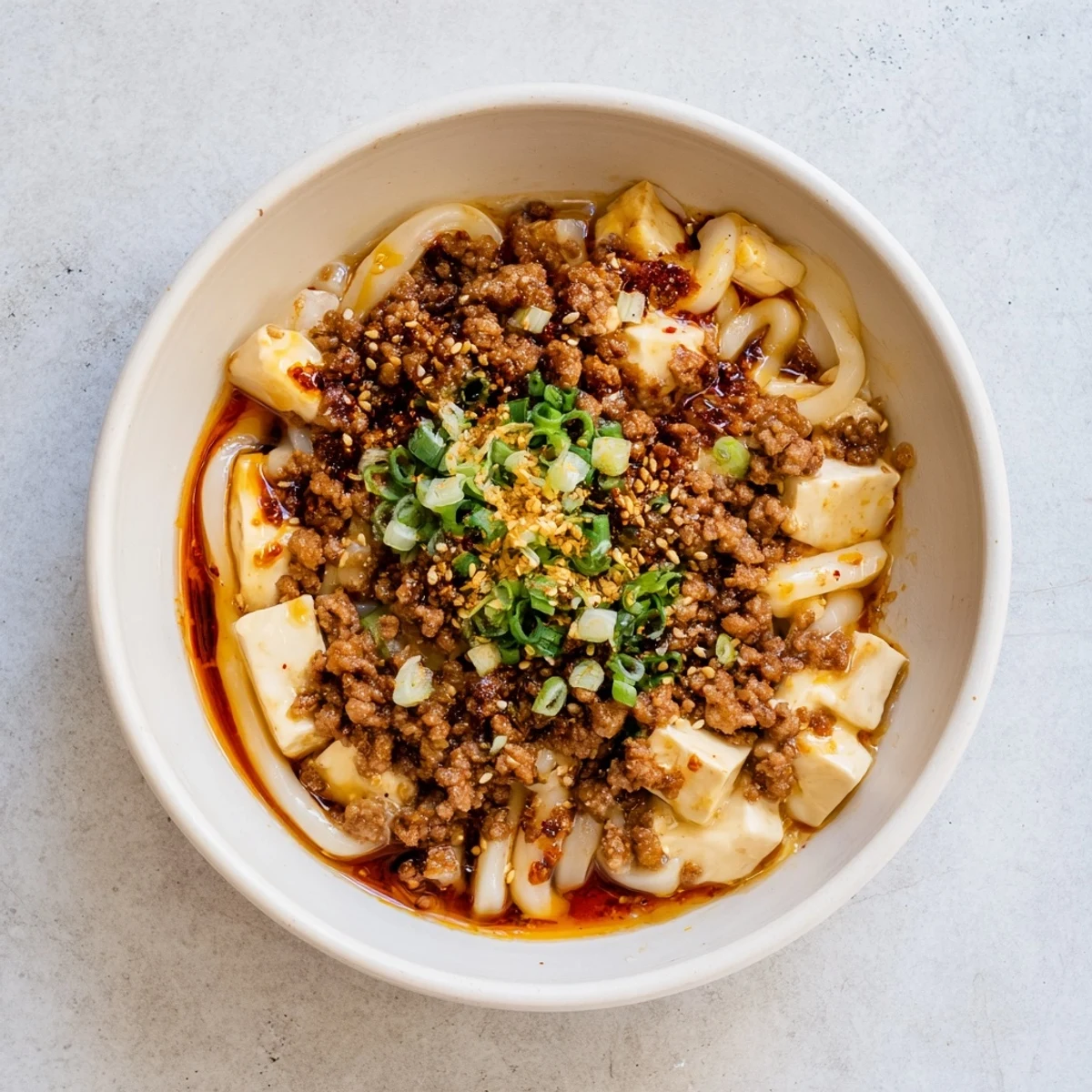
 This comforting fusion bowl brings together soft tofu cubes and thick udon noodles in a fiery, aromatic sauce. The Sichuan peppercorns create that signature tingling sensation while fermented bean paste adds deep umami flavor. Ground pork provides richness, though plant-based mince works perfectly for vegetarian versions. The sauce thickens beautifully to coat every strand of chewy udon, creating satisfying slurps in each bite. Quick to prepare but deeply flavorful, this dish delivers restaurant-quality results with minimal effort.
The steam rising from that bowl still takes me back to a tiny apartment in Tokyo where I first tasted someone's brilliant mistake. My friend had meant to make proper mapo tofu but ran out of rice, so she dumped the spicy, numbling sauce over thick udon noodles instead. We both stopped mid-conversation after the first bite, exchanging that wide-eyed look that says something extraordinary just happened.
I made this for my brother who claimed he hated tofu, watching him scrape his bowl clean without saying a word. Later he admitted he only kept eating because the sauce was so incredible, and by the third bite, he'd forgotten he was eating tofu at all. Now he requests it every time he visits, which is the highest compliment anyone can pay a recipe.
Ingredients
- Soft tofu: Cubed gently because it falls apart in the sauce like soft clouds, absorbing all those bold flavors
- Ground pork: Break it into small crumbles as it cooks so every mouthful gets some meaty richness
- Fresh udon noodles: Their thick, chewy texture stands up perfectly to the bold sauce unlike thinner noodles
- Sichuan peppercorns: Lightly crushed before toasting releases their signature numbing fragrance
- Doubanjiang: This fermented chili bean paste is the soul of the dish, worth seeking out at an Asian market
- Cornstarch slurry: The secret to that restaurant-quality glossy coating that clings to every strand
Instructions
- Get everything ready first:
- Cube your tofu carefully, mince the garlic and ginger until they're almost paste-like, and slice those spring onions separating white from green parts. Set a large pot of water to boil while you prep the sauce ingredients.
- Toast those peppercorns:
- Heat oil in your wok over medium heat and add the crushed Sichuan peppercorns, letting them dance around for 30 seconds until the room fills with their citrusy, floral aroma. Remove them if you prefer less heat, or leave them in for brave eaters.
- Build your flavor base:
- Add garlic, ginger, and the white parts of your spring onions, stirring constantly for one minute until the fragrance makes your stomach growl. Increase heat to medium-high and add your meat, breaking it into tiny pieces as it browns.
- Transform into mapo sauce:
- Stir in the doubanjiang and watch the oil turn red, cooking for two minutes as the paste's fermented flavor blooms. Pour in your sauces, wine, and sugar, letting everything bubble together into a glossy, fragrant pool.
- Gently add the tofu:
- Lower heat and slide in those tender tofu cubes along with the broth, letting everything simmer quietly for five minutes. Spoon sauce over the tofu occasionally as it cooks, treating it like something precious.
- Thicken to perfection:
- Stir in your cornstarch slurry and watch the sauce transform into something velvety and coat-worthy. Let it bubble for another two to three minutes until it's the consistency of heavy cream.
- Bring it all together:
- While the sauce simmers, cook your udon noodles until they're perfectly chewy, then drain and divide them among bowls. Spoon that gorgeous, spicy mapo tofu over the noodles, making sure everyone gets plenty of sauce and tofu.
- Finish with flourish:
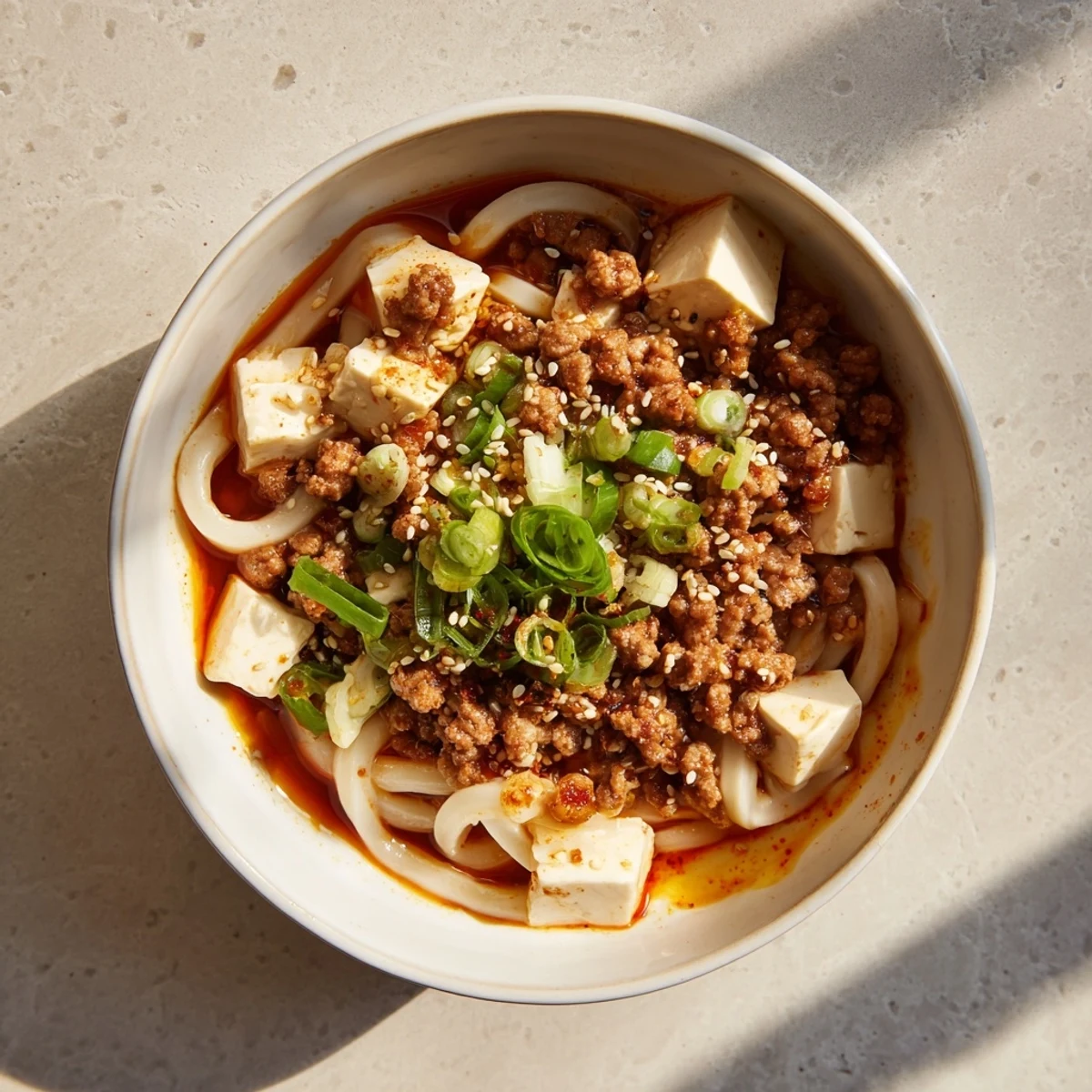
- Scatter the green onion tops and sesame seeds over each bowl, letting them catch the light. Add chili oil if you're feeling adventurous, then serve immediately while steam still rises in fragrant ribbons.
 Save to Pinterest
 This recipe has saved me on countless exhausting days when I needed something fast but refused to settle for takeout. There's something almost meditative about watching the sauce come together, knowing that in less than an hour, four people will be making those happy, quiet eating sounds that mean comfort has been served.
Making It Your Own
I've played with this recipe more times than I can count. Sometimes I use ground turkey instead of pork when I want something lighter, and once I used spaghetti when udon wasn't available. It still worked, though the texture wasn't quite right. The sauce is incredibly forgiving, so feel free to adjust the heat level or add vegetables like peas or bell peppers if you need more color on the plate.
The Vegetarian Version
My vegetarian friend swears by the plant-based mince version, saying it actually works better than pork in this dish because the crumbles stay firm and don't get lost in the sauce. Use mushroom sauce instead of oyster sauce, and make sure your vegetable broth has some depth, perhaps from adding a dried shiitake mushroom or two during the initial broth heating stage.
Perfect Wine Pairings
The first time I served this with sake, it felt like unlocking a secret level of the dish. A crisp lager works just as well, cutting through the richness while letting the spices shine. Avoid heavy red wines or oaky whites, they'll clash with the delicate numbing sensation and make everything feel heavy instead of bright and alive.
- Resist the urge to skip the Sichuan peppercorn toasting, it changes the entire character of the dish
- Let your cornstarch slurry come to room temperature before adding it to avoid lumps
- Never skip the garnish, those green onions add fresh brightness that balances the heat
 Save to Pinterest
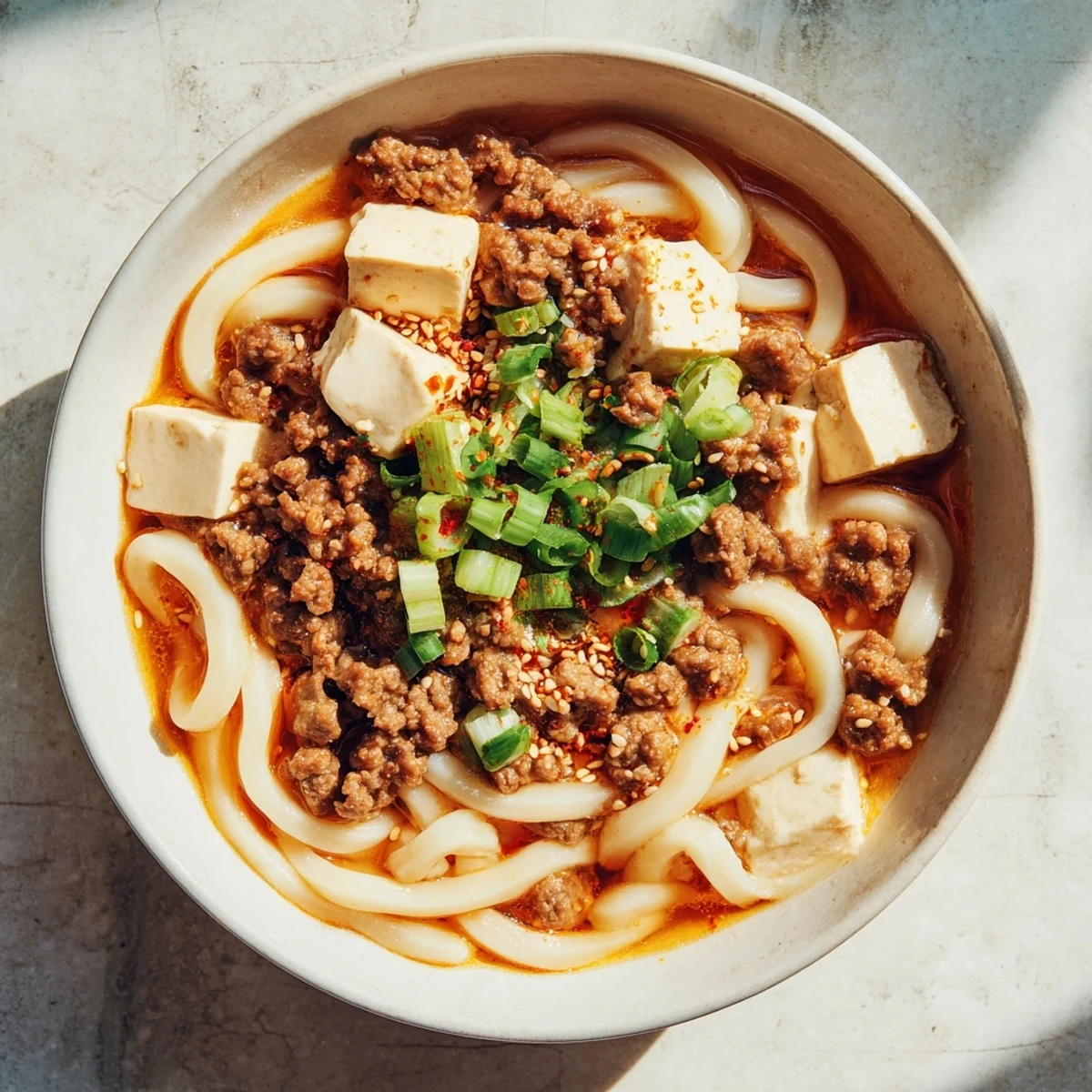
 There's nothing quite like watching someone take that first bite, their eyes widening as the heat hits and then softening as the comfort follows. This is the dish that turns a Tuesday dinner into something you'll remember.
Questions & Answers
- → What makes mapo tofu authentic?
-
Authentic mapo tofu features Sichuan peppercorns for numbing heat and doubanjiang fermented bean paste for rich, complex flavor. The combination creates the signature mala sensation alongside deep umami notes.
- → Can I make this vegetarian?
-
Absolutely. Substitute ground pork with plant-based mince and swap oyster sauce for mushroom sauce. The dish retains all its bold flavors and satisfying texture while being completely meat-free.
- → How do I prevent tofu from breaking?
-
Handle tofu gently when adding to the pan. Use a wide spatula to fold rather than stir vigorously. Simmering rather than boiling helps maintain the cubes' shape while allowing them to absorb the flavorful sauce.
- → What can I serve with this dish?
-
The dish is substantial enough to stand alone. Light sides like cucumber salad, steamed bok choy, or pickled vegetables provide refreshing contrast. A cold lager or light sake complements the spices beautifully.
- → How spicy is this dish?
-
The heat level is medium to spicy, adjustable by the amount of doubanjiang and chili oil used. Sichuan peppercorns contribute numbing rather than burning heat. Start with less fermented paste if sensitive to spice.